
The Etiquette of Attending Lessons in Islam: A Vital Key for Online Quran Learning
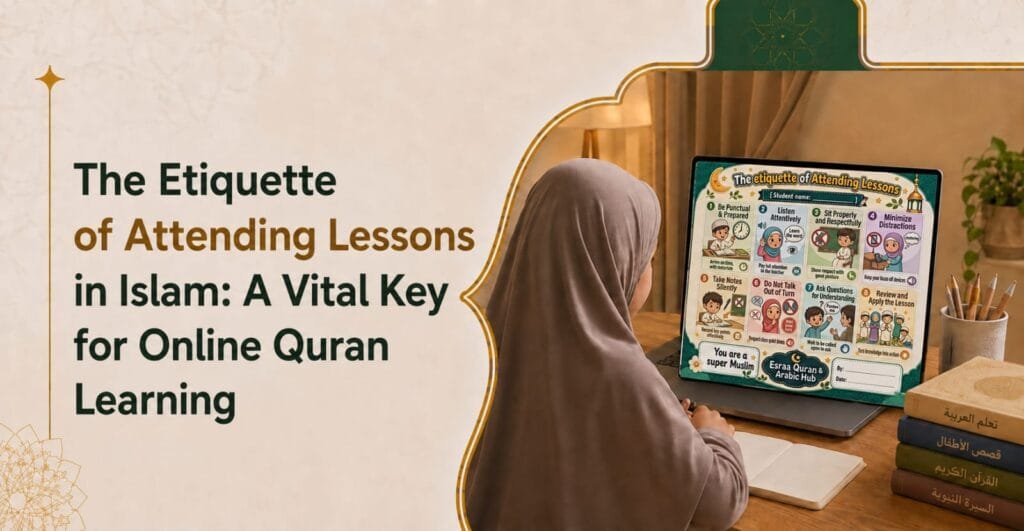
Imagine this scenario: an eager student logs into their online portal, sits in front of their laptop screen in London, New York, or Sydney, and waits for their private Quran session to begin. They have the best internet connection, a beautifully designed visual workspace, and highly proficient digital learning tools right at their fingertips. Everything is technically perfect.
Yet, as the session progresses, the student feels a strange lack of absorption, struggles to retain the verses, and finishes the hour feeling structurally fatigued rather than spiritually uplifted.
When parents notice this bottleneck in their child’s digital education, the solution rarely lies in upgrading the hardware or changing the software. More often than not, it requires reclaiming a beautifully sophisticated, classical framework that protects the flow of knowledge: The Islamic Etiquette of Attending Lessons (Adab al-Majalis).
In our fast-paced modern world, Adab (spiritual etiquette) is frequently misunderstood as mere rigid politeness or old-fashioned cultural rules. However, Islamic psychology and linguistic heritage reveal that Adab is actually a highly conscious cognitive engine. It is the prerequisite that converts raw information into Barakah (divine blessing) and transforms a cold digital stream into a living, unforgettable transformation within the soul.
1. The Linguistic Anatomy of Adab: Preparing the Vessel for Revelation
To understand why the Prophet Muhammad (ﷺ) placed Adab before information, we must unpack the root word itself. In classical Arabic, Adab (أَدَب) derives from a root that means to invite people to a beautifully prepared, nourishing banquet.
When a student practices Adab before a lesson, they are not just showing manners; they are actively preparing their cognitive vessel to receive a divine feast. The Quran is the ultimate banquet of Allah, and revelation requires a structured environment to settle deeply into the human intellect.
The classical scholars designed a precise two-step behavioral filter for attending a circle of knowledge, which maps perfectly onto modern online learning:
   [ Step 1: External Adab (The Physical Setup) ] ───► Clear of distractions, pure intention, clean posture
          │
          ▼
   [ Step 2: Internal Adab (The Heart's Vessel) ]  ───► Deep humility, sharp listening, absolute respect
          │
          ▼
   The Result: Raw Information transforms into "Noor" (Spiritual Light) & Deep Memory Retention
When an online student sits with clean posture, turns off background notifications, and prepares their workspace with respect, they are letting their brain know: What is about to enter this mind right now is sacred, powerful, and worthy of my undivided attention.
2. The Prophetic Blueprint: Listening with the Whole Soul
The Quran explicitly establishes the ultimate standard for attending to divine knowledge:
“Who listen to speech and follow the best of it. Those are the ones Allah has guided, and those are people of understanding.” (Surah Az-Zumar, 39:18)
True listening in Islam is an active, focused energy, not a passive background noise. The early scholars of Islam would say: “We used to learn Adab for twenty years before learning knowledge for twenty years.” They understood that information without Adab is like a seed thrown onto concrete—it cannot grow roots, no matter how high the quality of the seed.
3. Activating Lesson Etiquette in the Screen Age
Studying the Quran or Arabic behind a flat screen presents a serious challenge to a child’s natural sense of Adab. Because they are in the comfort of their own home, it is incredibly easy for the session to lose its sacredness.
Here is how reclaiming classical Islamic etiquette actively fixes the modern online learning ecosystem:
- Eliminating the Trap of Digital Casualness: Slipping into a class while lounging lazily in bed sends a subconscious message of indifference. Teaching children to perform a fresh Wudu, dress cleanly, and sit at a desk before turning on their camera instantly recalibrates their neurological focus.
- Cultivating Active Presence and Eye Contact: Adab demands that a student looks directly at their teacher, listens intently, and does not open alternate browser tabs during a session.
- Unlocking the Barakah of Gratitude to the Teacher: A central pillar of Islamic lesson etiquette is making Dua (supplication) for the one teaching you and speaking to them with profound respect.
Cultivating Adab and Intellect at Esraa Quran & Arabic Hub
At Esraa Quran & Arabic Hub, we refuse to treat online education as a mechanical, automated business transaction. We recognize that teaching our children in the diaspora requires blending the latest technological tools with the timeless, elegant framework of prophetic Adab.
Through our specialized 1-on-1 private sessions, our highly proficient and expert instructors don’t just correct mistakes in recitation; they actively mentor the student’s character. By merging cutting-edge gamification with the sacred manners of learning, we build an intelligent, confident, and balanced Muslim identity, empowering your child to grow up exceptional in both skill and character within their Western community.
🌟 Bring This Lesson to Life in Your Home! (Free Printable Posters)
Teaching our children Adab (Islamic etiquette) is much easier when it is visually engaging! We have designed a collection of beautiful, premium educational posters specifically for this topic—matching our signature emerald-and-gold digital style.
You can easily print them out, hang them up by your child’s study desk, or use them as a visual daily checklist to serve as a joyful reminder to practice these beautiful manners.
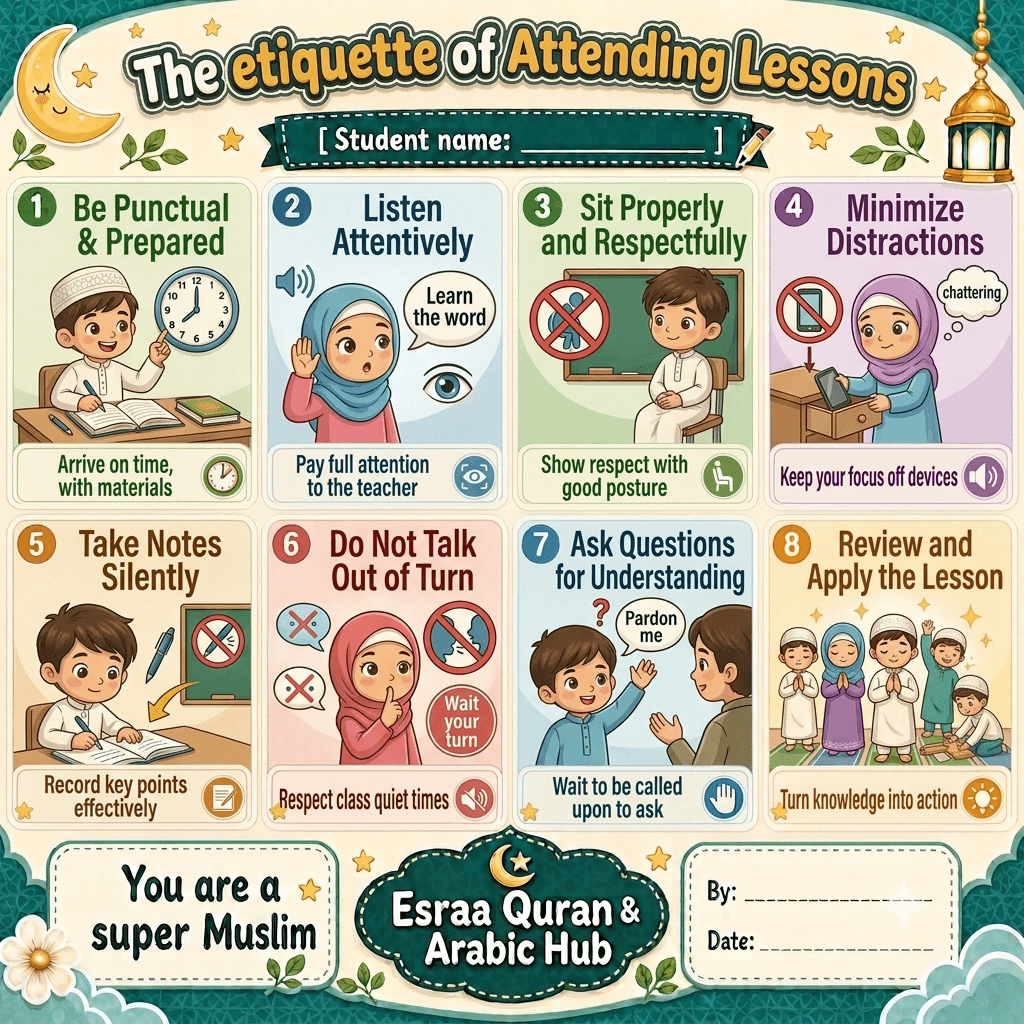
- 👉 [Book a 100% Free Trial Private Session for Your Child Now] — Let your child discover the sheer joy of conscious, visual, and expert-led online education built upon the beautiful manners of prophetic learning.
Esraa Quran & Arabic Hub Connecting Hearts to the Divine Revelation, Wherever You Are.
📩 Contact us at: info@esraaquranarabichub.com