
In a fast-paced world cluttered with endless responsibilities, digital noise and future anxieties constantly race through our minds. Naturally, humans are in a perpetual search for an “anchor”—a state of inner peace and serenity.
Amidst this modern chaos, practicing the daily remembrances emerges as a profound prophetic gift. It serves as a vital muslim prayer for anxiety and a spiritual recharging station for every believer striving to overcome daily stress and find mental clarity.
These daily remembrances are far from being just words mechanically repeated by the tongue. Instead, integrating these specific supplications into your life represents a holistic strategy for spiritual protection, constructing a psychological shield that is renewed twice a day.
1. Resetting the Compass: The Power of Daily Remembrances
When you begin your day with spiritual mindfulness, you are not simply reading dry texts. You are actively performing a “factory reset” for your mind and heart through focus. Utilizing this powerful muslim prayer for anxiety helps re-center your soul and protects your mental well-being from the noise of the world.
- In the Morning: When you recite the morning portion of the Adhkar, you declare your independence from absolute reliance on material means. You hand over the reins of your day to the Creator, which drastically reduces productivity anxiety and the fear of the unknown.
- In the Evening: When you transition into the night, you shed the burdens of the day’s hustle. Implementing this evening muslim prayer for anxiety before bed prepares you for sleep with a heart full of contentment, which directly combats insomnia and bedtime overthinking.
2. The Shield of Spiritual Armor and Devotional Protection
The daily remembrances function as a positive energy field surrounding the believer. A mindful recitation of Ayat al-Kursi, Surah Al-Ikhlas, and the Mu’awwidhatayn (Surah Al-Falaq and Surah An-Nas) instills a deep sense of security and absolute trust in divine custody.
The Prophet Muhammad (peace be upon him) said regarding Surah Al-Ikhlas and the Mu’awwidhatayn:
“Recite them three times in the morning and evening; they will suffice you against everything.” > — Sunan At-Tirmidhi
This prophetic “sufficiency” proves why we need a consistent muslim prayer for anxiety for comprehensive protection against both tangible harms and intangible harms, such as envy, the evil eye, and dark, anxious thoughts.
3. The Psychological Impact of Mindful Dhikr on Stress
Modern psychological studies consistently show that practicing gratitude lowers cortisol (the stress hormone) levels. Neurologists state that repetitive, meaningful phrases calm the amygdala—the part of the brain responsible for the “fight or flight” response. This is where the routine of muslim prayer for anxiety works so effectively on a psychological level.
Daily dhikr represents the highest form of gratitude and recognition of divine grace. For instance, when you repeat daily phrases of praise and thankfulness, you are actively training your brain to notice blessings. This shifts your cognitive focus toward positives and glad tidings, rather than drowning in anxiety.
4. How to Transform Adhkar into a Living Experience
To reap the full fruits of these daily remembrances and elevate your spiritual mindfulness, try implementing these three practical steps:
- Presence of Heart (Khushu): Do not race against time just to finish them. Read your chosen muslim prayer for anxiety slowly, absorbing the profound meaning of every word—especially the seeking of forgiveness and prayers for well-being (Afiyah).
- Anchor the Time: Connect the Adhkar to an established daily routine. For example, make the morning portion a non-negotiable routine right after Fajr prayer or with your first cup of coffee. Similarly, read the evening part right after Asr or Maghrib prayer.
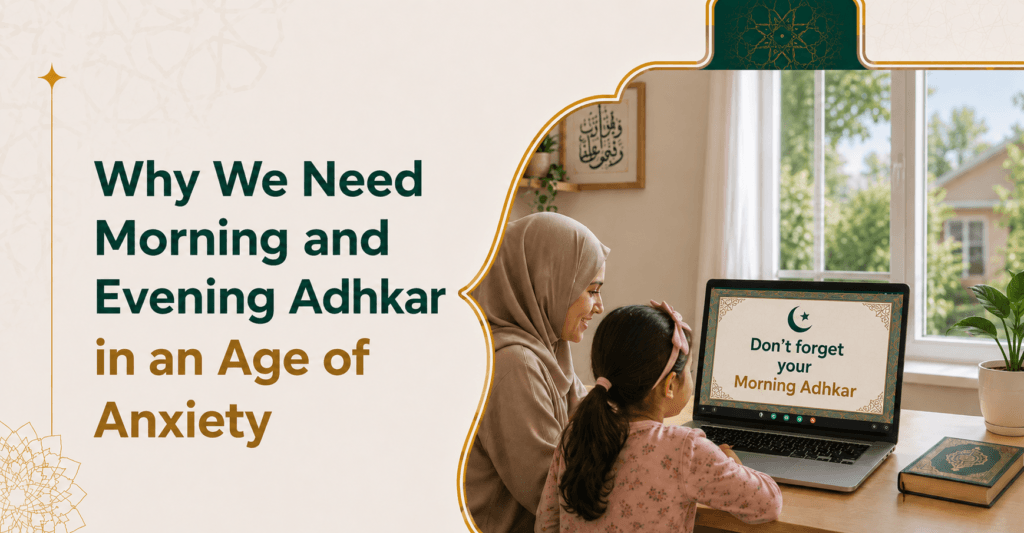
- Leverage EdTech and Apps: Utilize modern digital tools and well-designed apps. These tools remind you of the timings and display the translation alongside their meanings, making them beautiful, engaging, and accessible for the younger generation.
Conclusion: Finding Serenity
Embracing the Adhkar as your primary muslim prayer for anxiety acts as a “direct line” connecting earth to the heavens. They grant us a safe, serene distance from the noise and materialism of the world. It is the most rewarding 10-minute investment of your day, buying you tranquility for your heart, protection for your body, and blessings (Barakah) for your time.
We’d Love to Hear From You!
Leave a comment below to tell us: Which of these steps do you find hardest to practice in your current environment? Share your challenges with us, and we will be happy to help you step-by-step with practical solutions that fit your busy Western lifestyle.
For inquiries and contact: