
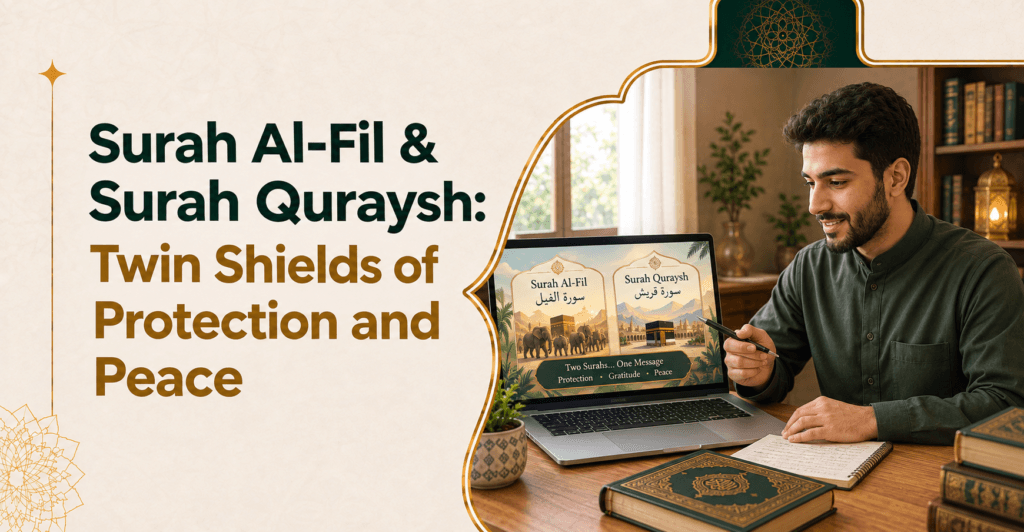
Surah Al-Fil & Surah Quraysh: Twin Shields of Protection and Peace
In the arrangement of the Holy Quran, certain chapters share such a profound historical and spiritual bond that classical scholars like Imam Ubayy ibn Ka’b considered them two sides of the same divine coin. Surah Al-Fil (Surah 105) and Surah Quraysh (Surah 106) form a miraculous pair, presenting a complete picture of how Allah shields His sanctuaries and grants peace, security, and sustenance to believers.
While Surah Al-Fil shows how Allah defends His house from external threats, Surah Quraysh reminds us of the internal blessings of safety and economic stability that demand our worship and gratitude.
The Historical Context: The Year of the Elephant
The events uniting both surahs occurred in 570 CE—the very year Prophet Muhammad ﷺ was born, known in Arabian history as ‘Am al-Fil (The Year of the Elephant).
Abrahah Al-Ashram, the Abyssinian governor of Yemen, built a grand cathedral in Sana’a to divert Arab pilgrims away from the Kaaba in Makkah. When his efforts failed, he marched toward Makkah with a massive army, including giant war elephants, determined to demolish the sacred House of Allah.
When Abdul-Muttalib (the Prophet’s grandfather and custodian of Makkah) confronted Abrahah, he only requested the return of his stolen camels. Surprised, Abrahah asked why he did not plead for the Kaaba. Abdul-Muttalib uttered his legendary words:
“I am the lord of the camels, but this House has a Lord who will protect it.”
Part 1: Surah Al-Fil – Divine Intervention Against Tyranny
Surah Al-Fil details the miraculous destruction of Abrahah’s army without a single sword being drawn by human hands.
1. {أَلَمْ تَرَ كَيْفَ فَعَلَ رَبُّكَ بِأَصْحابِ الْفِيلِ}
“Have you not considered, [O Muhammad], how your Lord dealt with the companions of the elephant?”
- The Insight: A rhetorical question instilling absolute certainty. Allah asks the Prophet ﷺ (and every reader) to contemplate how easily worldly superpowers are humbled when they challenge the Almighty.
2. {أَلَمْ يَجْعَلْ كَيْدَهُمْ فِي تَضْلِيلٍ}
“Did He not make their plan go astray?”
- The Insight: Abrahah’s strategic plot was completely neutralized. The lead elephant, Mahmud, knelt before Makkah and refused to move forward, yet charged readily in any other direction.
3–5. The Divine Defense Force
- {وَأَرْسَلَ عَلَيْهِمْ طَيْرًا أَبَابِيلَ}:“And He sent against them birds in flocks”
- {تَرْمِيهِم بِحِجَارَةٍ مِّن سِجِّيلٍ}:“Striking them with stones of hard clay”
- {فَجَعَلَهُمْ كَعَصْفٍ مَّأْكُولٍ}:“And He made them like eaten straw.”
The Lesson: Allah did not send giant monsters to destroy an army with elephants; He sent tiny, flocking birds (Ababeel) carrying small clay pebbles. The mighty army was reduced to chewed-up straw (‘Asfin Ma’kool), proving that human power is nothing before divine decree.
Part 2: Surah Quraysh – Gratitude for Security and Sustenance
Surah Quraysh picks up right where Surah Al-Fil leaves off. Because Allah destroyed the elephant army, the tribe of Quraysh maintained their prestige, safety, and trade routes.
                      ┌─────────────────────────────────────────┐
                      │    TWIN BLESSINGS IN SURAH QURAYSH      │
                      └────────────────────┬────────────────────┘
                                           │
         ┌─────────────────────────────────┴─────────────────────────────────┐
         │                                                                   │
┌────────┴────────┐                                                 ┌────────┴────────┐
│  BLESSING 1     │                                                 │   BLESSING 2    │
│ Freedom of Trade│                                                 │ Divine Security │
├─────────────────┤                                                 ├─────────────────┤
│ Winter & Summer │                                                 │ Protection from │
│  Caravans (Yemen│                                                 │ Hunger and Fear │
│   & Al-Sham)    │                                                 │                 │
└────────┬────────┘                                                 └────────┬────────┘
         │                                                                   │
         └─────────────────────────────────┬─────────────────────────────────┘
                                           │
                                  ┌────────┴────────┐
                                  │   THE RESPONSE  │
                                  │ Worship the Lord│
                                  │  of this House  │
                                  └─────────────────┘
1–2. The Trade Caravans
- {لإِيلاَفِ قُرَيْشٍ * إِيلافِهِمْ رِحْلَةَ الشِّتَاءِ وَالصَّيْفِ}:“For the accustomed security of the Quraysh—their accustomed security in the caravan of winter and summer”
- The Insight: Makkah was a barren desert valley with no natural agriculture. Yet Allah granted Quraysh secure trade routes to Yemen in the winter and Al-Sham (Syria) in the summer. Surrounding tribes were raided, but Quraysh traveled unharmed out of respect for their custodianship of the Kaaba.
3–4. The Ultimate Imperative
- {فَلْيَعْبُدُوا رَبَّ هَٰذَا الْبَيْتِ}:“Let them worship the Lord of this House”
- {الَّذِي أَطْعَمَهُم مِّن جُوعٍ وَآمَنَهُم مِّنْ خَوْفٍ}:“Who has fed them, [saving them] from hunger and made them safe, [saving them] from fear.”
The Core Lesson: Food security (Sustenance) and physical safety (Peace) are the two foundational pillars of human civilization. When Allah grants you safety and sustenance, your natural response must be humble worship (‘Ibadah).
Comparative Matrix of the Twin Surahs
| Aspect | Surah Al-Fil | Surah Quraysh |
| Focus | Destruction of enemies / External threat | Preservation of blessings / Internal peace |
| Divine Attribute | Allah’s Might & Justice (Al-Azeem) | Allah’s Provision & Mercy (Al-Razzaq) |
| Human Action Called For | Contemplation of Allah’s power | Gratitude and exclusive worship |
Core Lessons for Modern Life
- Never Fear Tyranny: No matter how intimidating modern “elephants” or military powers may seem, Allah remains the ultimate defender of truth.
- Appreciate Basic Blessings: Having food on your table (Feeding from hunger) and sleeping without fear (Safety from fear) are immense favors that demand daily gratitude.
- Connect Provision to Worship: Use your financial stability and peaceful surroundings to draw closer to Allah, not to become heedless.
Master the Recitation and Meanings With Us
Understanding the historical depth and linguistic harmony of Surah Al-Fil and Surah Quraysh transforms them from short chapters recited quickly in prayer into profound reminders of Allah’s protection and provision.
At Esraa Quran & Arabic Hub, we guide you and your family on a practical Quranic journey through:
- One-on-one online sessions to master Tajweed rules and fluent recitation.
- Interactive Tadabbur (reflection) classes exploring the stories behind each chapter.
- A peaceful, digital environment tailored for non-native Arabic speakers worldwide.
Protect your heart with gratitude and trust in divine protection. Start your Quranic journey with us today.
📧 Contact us: info@esraaquranarabichub.com
📱 WhatsApp: +201070166574