
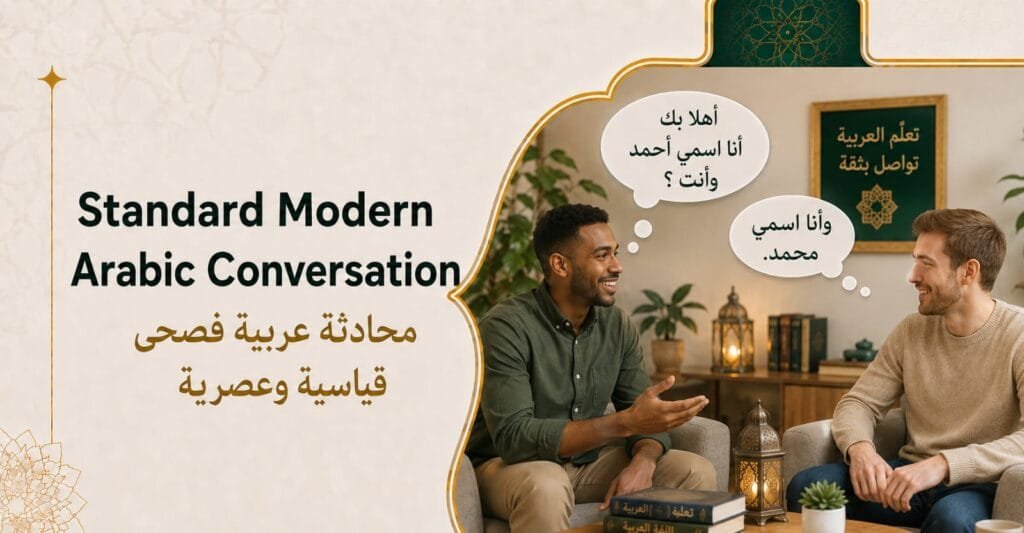
Easy Arabic Greetings: Mastering Your First Conversation in Arabic
Taking your first steps into learning Arabic can feel intimidating, but starting with a simple greeting is the best way to build confidence. Whether you are learning Modern Standard Arabic (MSA) or Egyptian Arabic, mastering basic greetings and introductions allows you to connect instantly with native speakers anywhere in the Arab world.
In this beginner-friendly lesson, we break down a classic, real-life introductory dialogue using three script formats: Arabic, English translation, and Franco-Arabic (Arabizi)—the romanized system used by millions across texting apps and social media.
Understanding Franco-Arabic Numbers
Before diving into the dialogue, notice how Franco-Arabic uses numbers to represent Arabic sounds that don’t exist in the English alphabet:
- 3 = ع (Ain) – a deep throat sound.
- 7 = ح (Haa) – a sharp, raspy “h” sound.
The Conversation: Meeting for the First Time
Here is the essential exchange between two people, Ahmed and Mohammed, introducing themselves.
| Speaker | Arabic Script | Franco-Arabic (Arabizi) | English Translation |
| Ahmed | السلام عليكم، كيف حالك؟ | Al-salam 3alaykom, kayfa halak? | Peace be upon you, how are you? |
| Mohammed | وعليكم السلام، الحمد لله بخير. أنا اسمي محمد، وأنت؟ | Wa 3alaykom al-salam, al-hamdulillah bekher. Ana esmy Mohammed, wa anta? | And upon you be peace, praise be to God, I am fine. My name is Mohammed, and you? |
| Ahmed | أنا اسمي أحمد. تشرفنا يا محمد! | Ana esmy Ahmed. Tsharrafna ya Mohammed! | My name is Ahmed. Nice to meet you, Mohammed! |
| Mohammed | الشرف ليا يا أحمد. | El sharaf leya ya Ahmed. | The honor is mine, Ahmed. |
Key Cultural & Linguistic Breakdown
- Al-Salam 3alaykom (السلام عليكم): The universal Islamic greeting used throughout the Arab world. The proper response is always Wa 3alaykom al-salam (وعليكم السلام).
- Al-hamdulillah (الحمد لله): Meaning “Praise be to God,” this phrase is culturally used whenever someone asks how you are doing, expressing gratitude for good health.
- Ana esmy… (أنا اسمي…): The standard way to say “My name is…” in both formal Arabic and spoken dialects.
- Tsharrafna (تشرفنا): Short for “We are honored,” used exactly like “Nice to meet you” in English.
Practicing this short exchange daily will give you a solid foundation for real-world interactions in any Arabic-speaking environment!
Ready to Take Your Arabic to the Next Level?
Mastering greetings is just the first step! Whether you want to speak fluently with Egyptian locals, unlock Arabic literature, or master Tajweed and Quranic recitation, personalized guidance makes all the difference.
Join Esraa Quran & Arabic Hub today for structured, interactive online classes tailored to your goals—delivered by expert native teachers.
- 📧 Contact Us: info@esraaquranarabichub.com
- 📱 WhatsApp: +201070166574