
Choosing the Right Circle: The Prophetic Psychology of Friendship and Identity
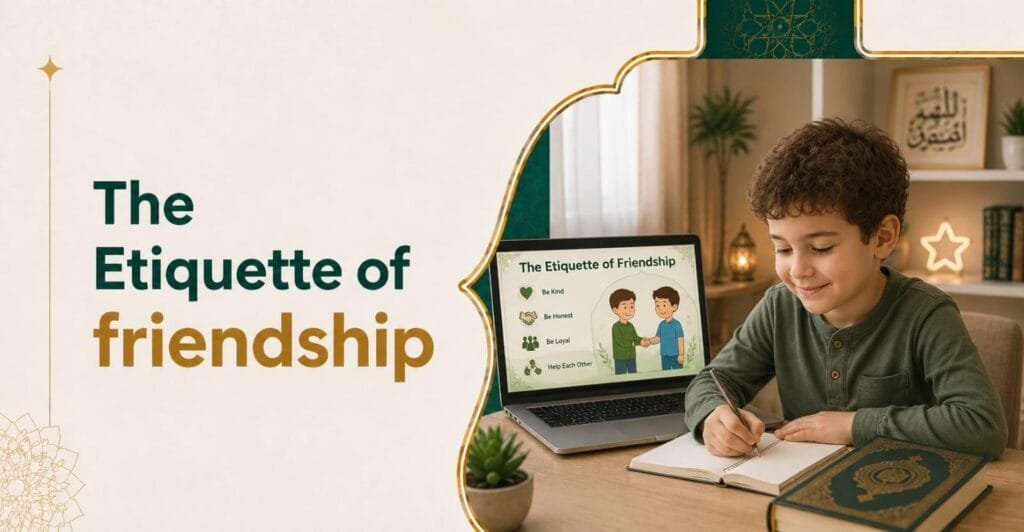
Imagine a young Muslim student stepping through the heavy doors of a bustling school in London, Toronto, or Chicago. Every single day, they navigate a complex social ecosystem shaped by peer pressure, trending digital cultures, and a natural human desire to belong.
In psychology, adolescence and childhood are periods where a person’s core identity is heavily shaped by their immediate social circle. We absorb the language, humor, habits, and priorities of the people we spend our time with.
Over fourteen centuries ago, Islam anticipated this profound psychological reality and established a compassionate, highly sophisticated social framework: The Etiquette of Friendship in Islam (Adab al-Suhbah).
For families raising children in the West, teaching our kids how to select, nurture, and maintain high-quality friendships is not about isolating them from the world. It is about empowering them with the emotional intelligence to build an authentic, uplifting, and resilient Muslim identity.
1. The Linguistic Anatomy of Suhbah: More Than Casual Acquaintance
To appreciate why Islam places such immense weight on friendship, we must look directly at its classical Arabic root DNA.
The word for friendship, Suhbah (صُحْبَة), and friend, Sahib (صَاحِب), comes from the root S-H-B (ص-ح-ب). In classical Arabic lexicons, this root does not mean a passing follower or a casual contact on social media. It carries a deeply intimate, literal definition: to accompany so closely that you influence one another’s direction, to adhere like a shadow, and to protect each other’s well-being.
   [ The Modern View: Social Contact ] ───► A casual follower, gaming buddy, or digital contact
                   │
                   ▼
   [ The Islamic View: Al-Sahib (الصَّاحِب) ] ───► A spiritual companion who actively shapes your heart
This is why the noble companions of the Prophet (ﷺ) were called the Sahabah—their deep companionship with the Messenger of Allah transformed their character, elevated their intellect, and reshaped their entire vision of life.
The Prophet Muhammad (ﷺ) summarized this psychological impact in a famous, compact law:
“A person is upon the religion of his close friend, so let one of you look at whom he befriends.” (Sunan Abi Dawud)
2. The Prophetic Parable: The Perfume Seller vs. The Blacksmith
To make this psychological reality accessible to a child’s imagination, the Prophet Muhammad (ﷺ) constructed a brilliant visual mind map using a timeless parable:
“The example of a good companion and a bad companion is like that of the seller of musk (perfume) and the one who pumps the blacksmith’s bellows…” (Sahih al-Bukhari)
| The Companion | The Analogy | The Psychological Impact on Your Child |
| The Good Friend (Musk Seller) | Even if they don’t give you perfume directly, sitting near them ensures you walk away smelling wonderful. | Their good manners, kindness, and mindfulness naturally rub off on your child. |
| The Harmful Friend (Blacksmith) | Even if they don’t burn your clothes, standing near them leaves you smelling of dark smoke. | Their toxicity, disrespect, or negative habits subtly corrupt your child’s peace and character. |
3. Core Etiquettes of Friendship in Islam (Adab al-Suhbah)
How do we teach our children to be a “musk seller” to their friends? Prophetic wisdom outlines precise behavioral steps:
🔹 Loving for the Sake of Allah (Al-Hubb Fillah)
Teach your children that true Islamic friendship is not transactional—we don’t value people based on their social status, popular clothes, or gaming skills. We value them because they remind us of goodness, truth, and Allah.
🔸 Expressing Affection and Appreciating Friends
The Prophet (ﷺ) instructed: “If a man loves his brother, let him inform him that he loves him.” (Sunan Abi Dawud). Encouraging children to express gratitude and say positive things to their friends builds deep emotional confidence and crushes toxic envy.
🔹 Defending Their Honor in Their Absence
True Adab dictates that if someone speaks ill of your friend behind their back, a loyal companion stands up for them. Teach your children to be a protective vault for their friends’ secrets and dignity.
🔸 Forgiveness and Emotional Flexibility
No friend is perfect. Islamic friendship teaches children how to overlook minor mistakes, accept sincere apologies, and avoid holding long grudges over petty misunderstandings.
Cultivating Strong Identities at Esraa Quran & Arabic Hub
At Esraa Quran & Arabic Hub, we realize that teaching the Quran to non-native speakers in the West requires moving far beyond dry, automated mechanical repetition. We do not just train tongues to pronounce letters; we build a deep, emotional connection between young hearts and the Divine Revelation.
During our highly customized 1-on-1 private sessions, our highly proficient and expert instructors guide your child through the exact rules of Tajweed with immense patience, unpacking the linguistic secrets behind classical Arabic vocabulary, and modeling the beautiful, respectful character (Adab) of the people of the Quran. We treat every session as a sacred milestone, giving your child the tools to read with absolute clarity, deep emotional intelligence, and unshakeable spiritual confidence.
🌟 Bring This Lesson to Life in Your Home! (Free Printable Posters)
To help your children visualize, track, and practice the beautiful steps of choosing and being a good friend, we have designed a collection of stunning, premium educational posters—crafted beautifully in our signature emerald-and-gold digital style.
You can download these high-resolution visual guides from our social media platforms for FREE. Simply print them out and display them in your child’s study corner or bedroom to serve as a joyful daily guide for building strong, noble friendships.
- 👉 [Click Here to Download Your Free Posters on Facebook & Instagram]
- 👉 [Book a 100% Free Trial Private Session for Your Child Now] — Give your child the opportunity to step into a beautiful, structured, and visually engaging online learning space that transforms classical knowledge into living, confident character.
Esraa Quran & Arabic Hub
Connecting Hearts to the Divine Revelation, Wherever You Are.
📩 Contact us at: info@esraaquranarabichub.com