
The Etiquette of Dress in Islam: Nurturing Haya and Character Through What We Wear
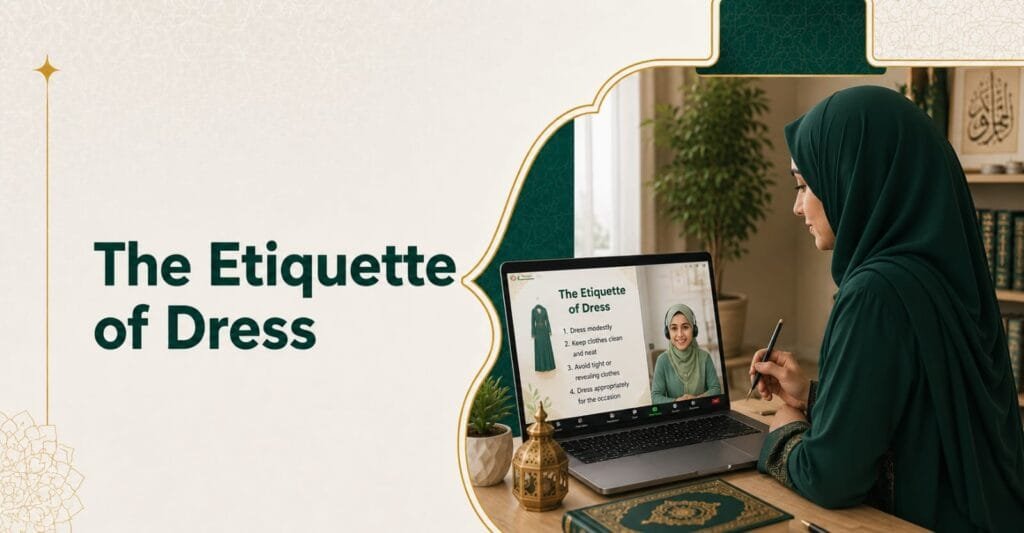
Imagine waking up every morning, walking over to your wardrobe, and picking out an outfit. For most of the modern world, this daily routine is driven entirely by fast-moving fashion trends, algorithms on social media, or a desire to conform to a specific peer group. In a highly visual, hyper-consumerist society, clothing has been reduced to a mere tool for self-advertisement or a commercial transaction. We often forget that what we put on our bodies is an immediate physical extension of our internal values, affecting our psychology, our behavior, and our spiritual state.
Over fourteen centuries ago, Islam elevated this mundane daily task into a profound act of worship, framing it as: The Etiquette of Dress in Islam (Adab al-Libas).
For Muslim families raising children in the West, teaching our kids how to navigate fashion with a prophetic mindset is an essential tool for building an authentic identity. It shifts clothing from a shallow vanity project into a conscious, beautiful shield that nurtures inner modesty (Haya), deep dignity, and unshakeable confidence within their communities.
1. The Linguistic Anatomy of Libas: A Divine Garment of Protection
To appreciate the profound spiritual status of clothing in Islam, we must examine its classical Arabic root DNA.
The primary word for clothing in the Quran is Libas (لِبَاس). In classical Arabic syntax, the root L-B-S (ل-ب-س) does not merely mean to throw a piece of fabric over your shoulders. It carries a deeply protective, literal definition: to envelope something entirely, to cover a vulnerability, or to intertwine two layers so closely that they become indistinguishable.
Allah uses this breathtaking linguistic imagery in the Quran to describe the ultimate spiritual protection:
“O children of Adam, We have bestowed upon you clothing to conceal your private parts and as adornment. But the clothing of righteousness (Libas al-Taqwa)—that is best.” (Surah Al-A’raf, 7:26)
                       [ The Dual Purpose of Libas ]
                                     │
          ┌──────────────────────────┴──────────────────────────┐
          ▼                                                     ▼
 [ The Physical Layer ]                                [ The Spiritual Layer ]
 To shield the body, preserve                          To shield the soul through Taqwa,
 modesty, and show gratitude.                          reflecting inner Haya to the world.
In the Islamic ecosystem, your physical clothing is meant to mirror your spiritual state. Just as physical garments protect your skin from the harsh external elements, your inner garment of mindfulness (Taqwa) protects your heart from spiritual harm. When a young Muslim understands this connection, dressing up stops being a chore and becomes an active celebration of their faith.
2. The Prophetic Blueprint: 8 Golden Rules of Haya and Dress
The Prophetic Sunnah outlines a highly practical, comprehensive blueprint for everyday dress, combining external elegance with internal humility. By teaching our children these core etiquettes, we help them build a balanced, confident personality:
1. Modest Clothing (Haya)
The foundation of Islamic dress is Haya (modesty). It means choosing loose, non-transparent clothing that beautifully covers the Awrah (private areas) with dignity. It teaches children to value their bodies as sacred trusts, rather than objects for public display or validation.
2. Start with the Right
Following the beautiful daily rhythm of the Sunnah, a believer always begins with the right side. When putting on a shirt, a coat, or a shoe, start with the right sleeve or foot. When taking clothes off, begin with the left. This simple pattern turns a mundane physical habit into a conscious act of mindfulness.
3. Be Humble, Not Showy
Prophetic Adab strikes a perfect balance between neatness and humility. We are commanded to be humble and not showy in our dress, avoiding outfits designed purely to show off wealth, status, or to look down upon others. True worth is built through character, not luxury labels.
4. Cleanliness is Part of Faith
Islam completely rejects untidiness under the guise of spirituality. Cleanliness is part of faith, meaning our garments should always be freshly washed, neat, and pleasant. Keeping our clothes clean reflects a heart that respects the sacred spaces and company it enters.
5. Dress Nicely for Others
Maintaining a good appearance is a core communal right. We are encouraged to dress nicely for others, presenting ourselves with clean, orderly clothes when greeting family, attending the mosque, or entering a circle of knowledge. It is an act of respect for the people around us.
6. Do Not Boast in Dress
A central pillar of clothing etiquette is maintaining absolute purity of intention. We must not boast in dress or allow a beautiful outfit to plant seeds of arrogance (Kibr) in our hearts. A garment should make us walk with greater gratitude, not greater pride.
7. Say the Sunnah Dua
To anchor our hearts in complete gratitude, the Prophet (ﷺ) taught us to make a short supplication when wearing something new:
“Allahumma laka al-hamdu, amta kasautanihi…” (O Allah, to You belongs all praise, You have clothed me with it…)
This powerful protocol shifts our focus from the material item to the ultimate Provider, reminding our children of the blessing of comfort and shelter.
8. Wear Halal Materials
Building a good character requires ensuring that even the materials we wear align with divine law. This includes avoiding forbidden elements—such as pure silk and gold for males—training the soul to practice discipline and respect divine boundaries in every facet of life.
Cultivating Character and Confidence at Esraa Quran & Arabic Hub
At Esraa Quran & Arabic Hub, we firmly believe that the ultimate fruit of studying the speech of Allah and classical Arabic grammar is the immediate, beautiful refinement of a student’s everyday character (Adab).
During our highly customized 1-on-1 private sessions, our highly proficient and expert instructors don’t just teach dry vocabulary. We actively discuss the beautiful manners of the Prophet (ﷺ), explore the deep linguistic roots of Quranic wisdom, and empower young Muslims in the diaspora to carry themselves with immense dignity, compassion, and unshakeable pride. We bridge the gap between classical Islamic ethics and real, lived confidence, giving your child the tools to become a radiant ambassador of prophetic excellence within their Western community.
🌟 Bring This Lesson to Life in Your Home! (Free Printable Posters)
To help your child visually track, practice, and celebrate the complete Prophetic etiquettes of Haya and Dress with absolute joy, we have designed a collection of stunning, premium educational posters—crafted beautifully in our signature emerald-and-gold digital style.
You can download these high-resolution visual checklists from our social media platforms for FREE. Simply print them out and place them inside your child’s wardrobe door or study corner to serve as a wonderful, creative daily guide for mastering their morning routine and dressing with prophetic pride!
- 👉 [Click Here to Download Your Free Posters on Facebook & Instagram]
- 👉 [Book a 100% Free Trial Private Session for Your Child Now] — Give your child the opportunity to step into a beautiful, structured, and visually engaging online learning space that transforms classical knowledge into living, confident character.
Esraa Quran & Arabic Hub
Connecting Hearts to the Divine Revelation, Wherever You Are.
📩 Contact us at: info@esraaquranarabichub.com