
The etiquette of dealing with neighbors in Islam
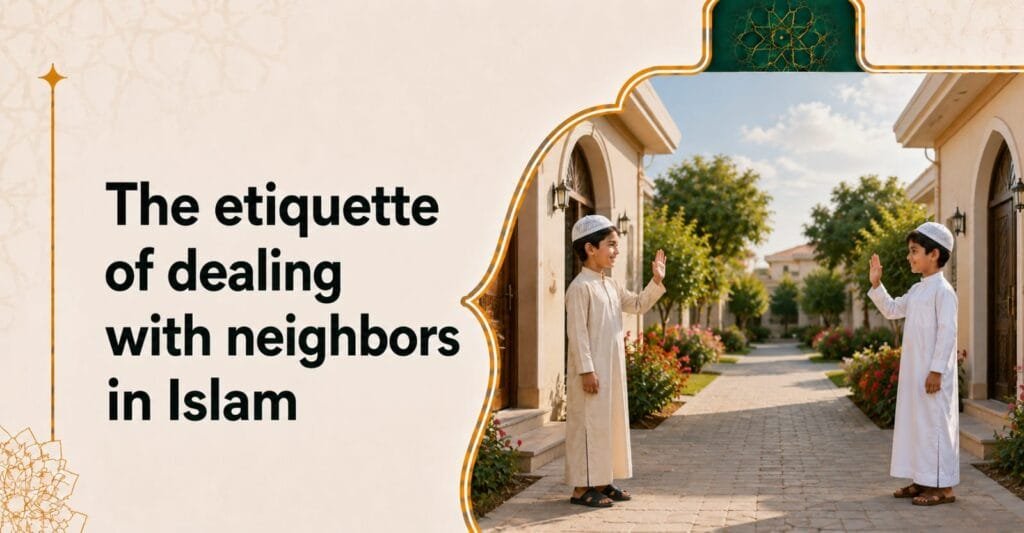
Imagine living in a modern urban apartment complex or a quiet suburban neighborhood in the West. Day in and day out, you pass by the same front doors, park next to the same cars, and walk the same pavements. Yet, in our hyper-individualistic, fast-paced society, it is entirely common to live next to someone for years without ever learning their name, hearing their story, or sharing a single conversation. We live in an era of unprecedented digital connection, yet our physical neighborhoods are experiencing a silent epidemic of isolation.
Over fourteen centuries ago, Islam anticipated this fracture and engineered a beautiful, highly conscious social framework: The etiquette of dealing with neighbors in Islam (Adab al-Jiwar).
For Muslim families raising children in the diaspora, practicing this unique prophetic framework is not just an optional cultural courtesy. It is a profound, unshakeable prophetic obligation that serves as a living, breathing form of Dawah—transforming a cold, detached neighborhood into a safe, connected, and compassionate sanctuary.
1. The Linguistic Anatomy of Jiwar: Becoming a Spiritual Shield
To appreciate why Islam places such immense psychological weight on neighborly care, we must strip away modern definitions and examine its classical Arabic root DNA.
The word Jiwar (جِوَار), meaning neighborliness, and Jar (جَار), meaning neighbor, come from a root that carries a profound dual definition in classical Arabic syntax: to live next to someone, and to seek protection, refuge, or asylum from danger.
When a person is a Jar in the Islamic framework, they are not just someone who happens to own the property adjacent to yours. Grammatically and spiritually, they are under your active protection. Your presence next to them should function as an absolute guarantee of their safety, dignity, and peace of mind.
   [ The Secular View: Next-Door Resident ] ───► A random person sharing a property boundary
                    │
                    ▼
   [ The Islamic View: Al-Jar (الْجَار) ]    ───► A human soul under your active spiritual protection
This definition applies universally. In the Prophetic blueprint, a neighbor is a neighbor—regardless of their faith, race, background, or social status. The classical scholars, drawing from the statements of the companions, noted that the radius of your neighborhood extends up to forty houses in every direction. This massive social radius transforms every Muslim household into a central powerhouse of care and security for the entire local community.
2. The Spiritual Architecture: The Weight of Gabriel’s Command
The standard for neighborly care in Islam is so extraordinarily high that the Prophet Muhammad (ﷺ) linked it directly to the integrity of a person’s faith. He stated with intense emphasis:
“By Allah, he does not believe! By Allah, he does not believe! By Allah, he does not believe!” It was said, “Who, O Messenger of Allah?” He replied: “The one whose neighbor is not safe from his harm.” (Sahih al-Bukhari)
The Prophet (ﷺ) also unveiled how heavily this social contract weighs on the divine scale, stating: “Angel Gabriel kept recommending me to treat neighbors with such kindness and care that I thought he would soon include them among my legal heirs.” (Sahih al-Bukhari).
In the Islamic ecosystem, your neighbor is elevated to the status of family. This prophetic architecture means that a Muslim cannot sleep with a full stomach while knowing their neighbor—Muslim or non-Muslim—is going hungry next door. It means our daily comfort is intrinsically bound to the well-being of the people across the hallway.
3. Practical Steps to Revive Neighborly Etiquette in the West
For youth growing up in Western societies, breaking through the modern culture of detachment and practicing the etiquette of dealing with neighbors in Islam builds immense emotional intelligence and a radiant Muslim identity:
- The Prophetic Soup Protocol: The Prophet (ﷺ) gave a beautifully practical piece of advice to his companion Abu Dharr: “When you cook some soup, add extra water to it and look after your neighbors.” (Sahih Muslim). In a modern context, this means sharing a plate of food, baking an extra batch of cookies, or dropping off a warm meal. It signals to your neighbor that they were actively in your thoughts.
- Guarding the Shield of Peace: Adab dictates that we actively protect our neighbors from physical and auditory harm. This involves keeping noise levels down late at night, ensuring our trash bins do not block their driveways, maintaining shared garden spaces, and greeting them with a genuine, warm smile every time our paths cross.
- The Firewall of Discretion: True neighborliness means protecting your neighbor’s privacy. A Muslim does not peer into a neighbor’s windows, track their private comings and goings, or spread gossip about their household struggles. We act as a vault that protects their secrets and safeguards their honor.
Nurturing Social Excellence at Esraa Quran & Arabic Hub
At Esraa Quran & Arabic Hub, we firmly believe that learning the language of revelation should never be confined to abstract academic theory. The ultimate proof of a student’s linguistic and Quranic mastery is the warmth, dignity, and excellence they manifest in their daily character (Adab).
During our highly specialized 1-on-1 private sessions, our highly proficient and expert instructors don’t just teach children how to read text; they mentor them on how to live it. We explore the profound social ethics of the Prophet (ﷺ), dissect the classical meanings of community rights, and empower young Muslims in the diaspora to build confident, compassionate, and highly respected personalities. We teach your child how to become a living bridge of peace, representing the beauty of Islam directly to their local communities.
🌟 Bring This Lesson to Life in Your Home! (Free Printable Posters)
To help your children visualize, track, and practice the beautiful Prophetic steps of caring for their neighbors, we have designed a collection of stunning, premium educational posters—crafted beautifully in our signature emerald-and-gold digital style.
You can download these high-resolution visual guides from our social media platforms for FREE. Simply print them out and display them in your child’s study corner or in the kitchen to serve as a joyful daily checklist for spreading kindness, sharing meals, and building a blessed, peaceful neighborhood.
- 👉 [Click Here to Download Your Free Posters on Facebook & Instagram]
- 👉 [Book a 100% Free Trial Private Session for Your Child Now] — Give your child the opportunity to step into a beautiful, structured, and visually engaging online learning space that transforms classical knowledge into living, confident character.
Esraa Quran & Arabic Hub
Connecting Hearts to the Divine Revelation, Wherever You Are.
📩 Contact us at: info@esraaquranarabichub.com