
Prophet Muhammad’s (PBUH) Mercy to Animals: A Story for Kids & Families
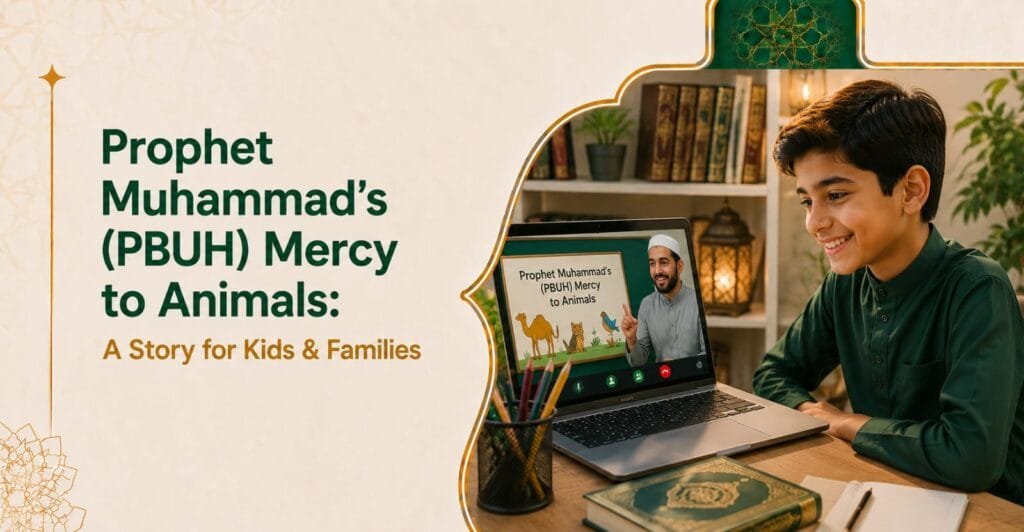
Have you ever looked at a tiny bird building a nest, or a stray cat resting in the shade, and wondered how our faith teaches us to treat them?
While modern environmental and animal rights movements started only a few generations ago, Islam introduced a comprehensive code of animal welfare over 1,400 years ago. At the heart of this code stands Prophet Muhammad (PBUH), whose universal mercy did not stop at human beings—it extended completely to animals, birds, and every living creature.
Allah states beautifully in the Quran that the Prophet (PBUH) was sent for one ultimate purpose:
“And We have not sent you, [O Muhammad], except as a mercy to the worlds.”
(Surah Al-Anbiya 21:107)
The word “worlds” (Al-Alamin) includes the world of humans, the world of plants, and very clearly, the animal kingdom. Let’s explore how the Prophet (PBUH) taught us to treat our fellow creatures with love, dignity, and profound respect.
The Core Concept: Animals Have Rights in Islam
In Islamic tradition, animals are not just random objects; they are living communities that praise Allah in their own unique ways. Prophet Muhammad (PBUH) taught that because animals cannot speak human language to complain when they are hungry, tired, or hurt, humans have a sacred duty to protect them.
He explicitly warned his companions:
“Fear Allah in your treatment of these voiceless animals.”
(Sunan Abi Dawud)
This means that providing food, water, medical care, and rest to an animal is not just a nice hobby—it is a direct act of worship that pleases Allah.
Beautiful Stories of Prophetic Compassion
The authentic books of Hadith (prophetic traditions) preserve heartwarming stories that show exactly how the Prophet (PBUH) interacted with animals in his daily life.
1. The Crying Camel
One day, the Prophet (PBUH) entered a garden belonging to a man from Madinah. Inside, there was a camel. When the camel saw the Prophet (PBUH), it began to shed tears and let out a deep, painful groan.
The Prophet (PBUH) immediately walked over to the camel, gently wiped away its tears, and stroked its head until it calmed down. He then asked, “Who is the owner of this camel?” A young man stepped forward. The Prophet (PBUH) looked at him seriously and said:
“Do you not fear Allah regarding this animal that He has put in your possession? Indeed, it has complained to me that you starve it and overload it with work.”
(Sunan Abi Dawud)
2. The Protective Mother Bird
On a travel journey, some companions saw a small bird (a redstart) with its two chicks. While the Prophet (PBUH) was away for a moment, a companion playfully took the two chicks. The mother bird began flapping its wings frantically in absolute distress.
When the Prophet (PBUH) returned and saw the bird’s panic, he was deeply moved and asked immediately:
“Who has distressed this bird by taking its young? Return its children to it at once!”
(Sahih Al-Bukhari)
3. The Miracle of the Thirsty Dog
The Prophet (PBUH) loved to teach his companions through real-life parables. He famously narrated the story of a man walking through a scorching desert who became intensely thirsty. He found a well, climbed down, drank water, and climbed back up.
When he reached the top, he saw a dog panting heavily and licking the moist mud out of extreme thirst. The man thought, “This dog is suffering from thirst just as I was.” He immediately climbed back down, filled his leather shoe with water, held it in his teeth as he climbed out, and gave the dog a drink.
The Prophet (PBUH) concluded: “Allah thanked him and forgave his sins.” The companions asked in surprise, “O Messenger of Allah, is there a reward for us in serving animals?” The Prophet (PBUH) replied with a universal law:
“There is a reward for serving any living being.”
(Sahih Al-Bukhari)
                  [ The Islamic Code of Animal Welfare ]
                                    │
       ┌────────────────────────────┼────────────────────────────┐
       ▼                            ▼                            ▼
 [ Perfect Mercy ]            [ Zero Cruelty ]            [ Heavenly Reward ]
Providing food, water,       Strictly banning physical   Serving animals can be
and rest to all pets.        abuse or target sports.      a direct path to Paradise.
4 Strict Rules the Prophet (PBUH) Established for Animal Rights
To protect animals from human cruelty, Prophet Muhammad (PBUH) established concrete legal boundaries:
- Banning Target Practice: He strictly forbade humans from using any living animal or bird as a target for archery or shooting practice.
- No Overloading: He made it illegal to load an animal with baggage that is heavier than its natural strength can bear.
- No Branding on the Face: He cursed those who branded or struck animals on their sensitive faces, commanding that their dignity be respected.
- Kindness at the End of Life: Even when harvesting animals for food, he commanded absolute mercy, saying: “When you slaughter, do it in the best manner. Let one of you sharpen his blade and give comfort to the animal.” He strictly forbade sharpening a knife in front of the animal’s eyes.
Key Facts Profile: Animal Welfare in Islam
| Prophetic Rule | Practical Application for Families Today |
| Feeding the Hungry | Putting out a bowl of fresh water for stray cats or birds in hot weather. |
| Protecting the Weak | Teaching children never to pull a cat’s tail, throw stones, or scare birds. |
| Respecting Habitats | Avoiding the destruction of nests, anthills, or natural animal shelters. |
| Speaking for the Voiceless | Caring for family pets by tracking their health, food, and emotional well-being. |
Applying the Prophet’s Legacy in Our Homes
Teaching our children the Seerah through the lens of animal mercy is one of the fastest ways to build empathy, kindness, and emotional intelligence. When a child learns that feeding a hungry street animal can wipe away sins and open the gates of Paradise, they naturally grow up to be gentle, responsible, and balanced human beings who respect all of Allah’s creation.
Why Studying the Seerah Through Themes Changes Perspectives
Diving into specialized themes of the Prophet’s life—like his relationship with the environment, his treatment of animals, or his interactive teaching methods—helps us see how practical Islam truly is. When you study the Quran and the Hadith systematically, you realize that our faith holds the answers to modern ethical questions, inspiring us to live consciously as true protectors (Khulafa) of the earth.
FAQ Section (Perfect for Kids)
- Are we allowed to keep pets in Islam?Yes! Keeping pets like cats, birds, or fish is completely allowed, provided that you take full responsibility for feeding them, keeping them clean, and giving them a happy, healthy environment.
- What was the Prophet’s favorite animal?The Prophet (PBUH) loved animals generally, but traditional sources highlight his deep affection for camels and horses, and Islamic history deeply celebrates cats. His companion Abu Hurairah was literally nicknamed “Father of the Kitten” because he carried a small cat in his sleeve, a name the Prophet fondly used.
- Did the Prophet (PBUH) allow hurting dangerous animals?Islam allows us to protect ourselves from genuinely harmful or venomous animals (like scorpions or poisonous snakes) if they pose a direct threat to human safety. However, even then, it must be done quickly and humanely without unnecessary torture.
- Can a person enter Hellfire because of treating an animal badly?Yes. The Prophet (PBUH) warned us about a woman who was punished in the afterlife because she locked up a cat, neither feeding it nor letting it free to eat the bugs of the earth, until it passed away. Cruelty is a major sin.
- How can I practice this Sunnah daily?You can do simple things! Leave a small container of water on your balcony for birds, feed a stray animal, or simply speak gently about animals to your friends and family.
Esraa Quran & Arabic Hub